In a previous blog post, I’ve written about Qikom’s cutaways. Whereas, this post is a tangent on why we would like to see more cutaways made and the knowledge shared.
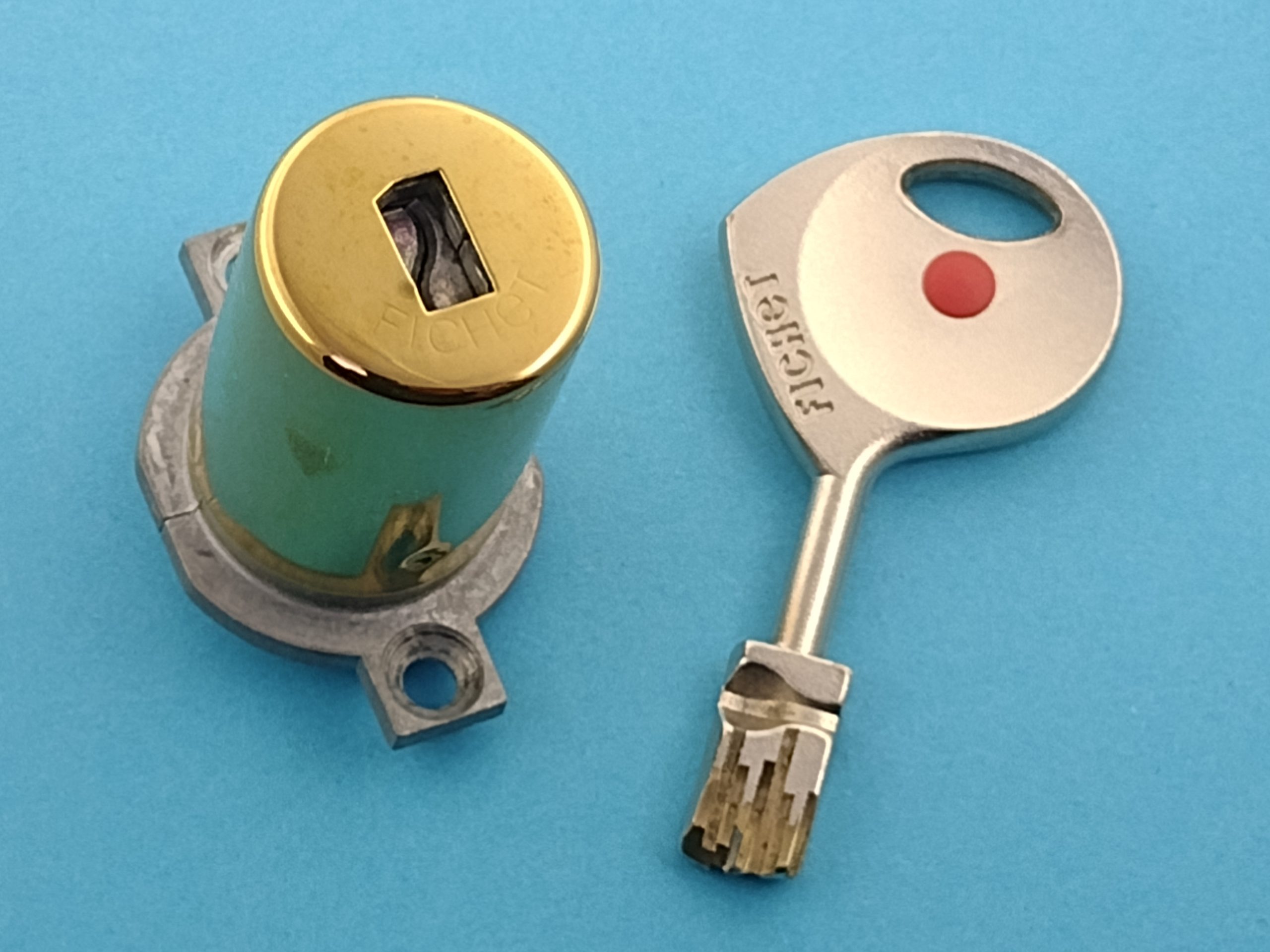
When we teach beginners, and show them a unique lock, often they can’t imagine what happens in the lock. As all they can see is the outside. To illustrate this, let’s play a short game with a Fichet 787. The key looks quite interesting, as it has half a dozen cutouts on each side. It’s not symmetrical, and can only be inserted in the keyway in one direction. You feel a spring pushing against the key, but at rotation it seems to be like any other lock.
If you haven’t seen this lock before, take a moment to imagine what the internals are like.
Fichet 787. CC-BY-4.0 Jan-Willem, Toool Blackbag
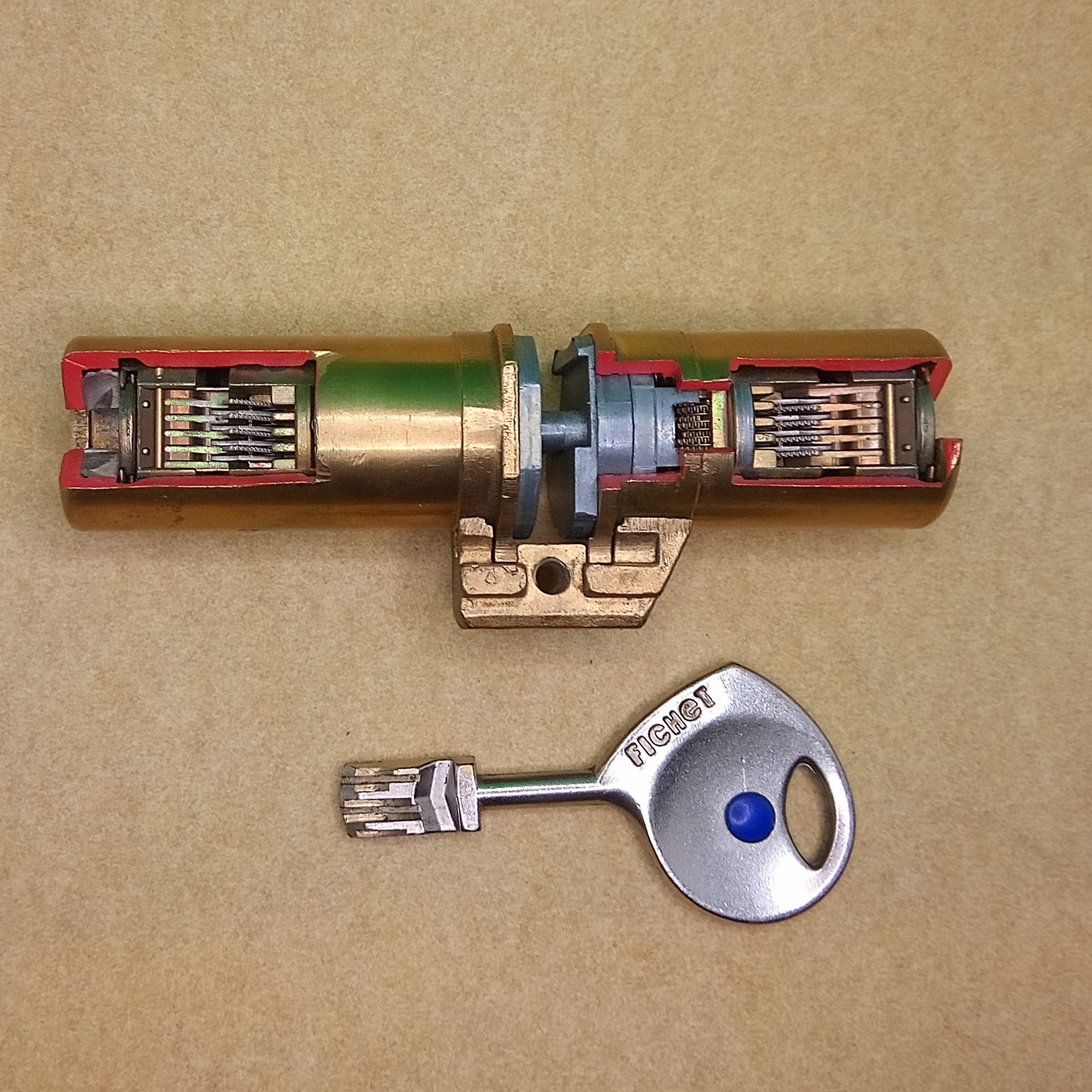
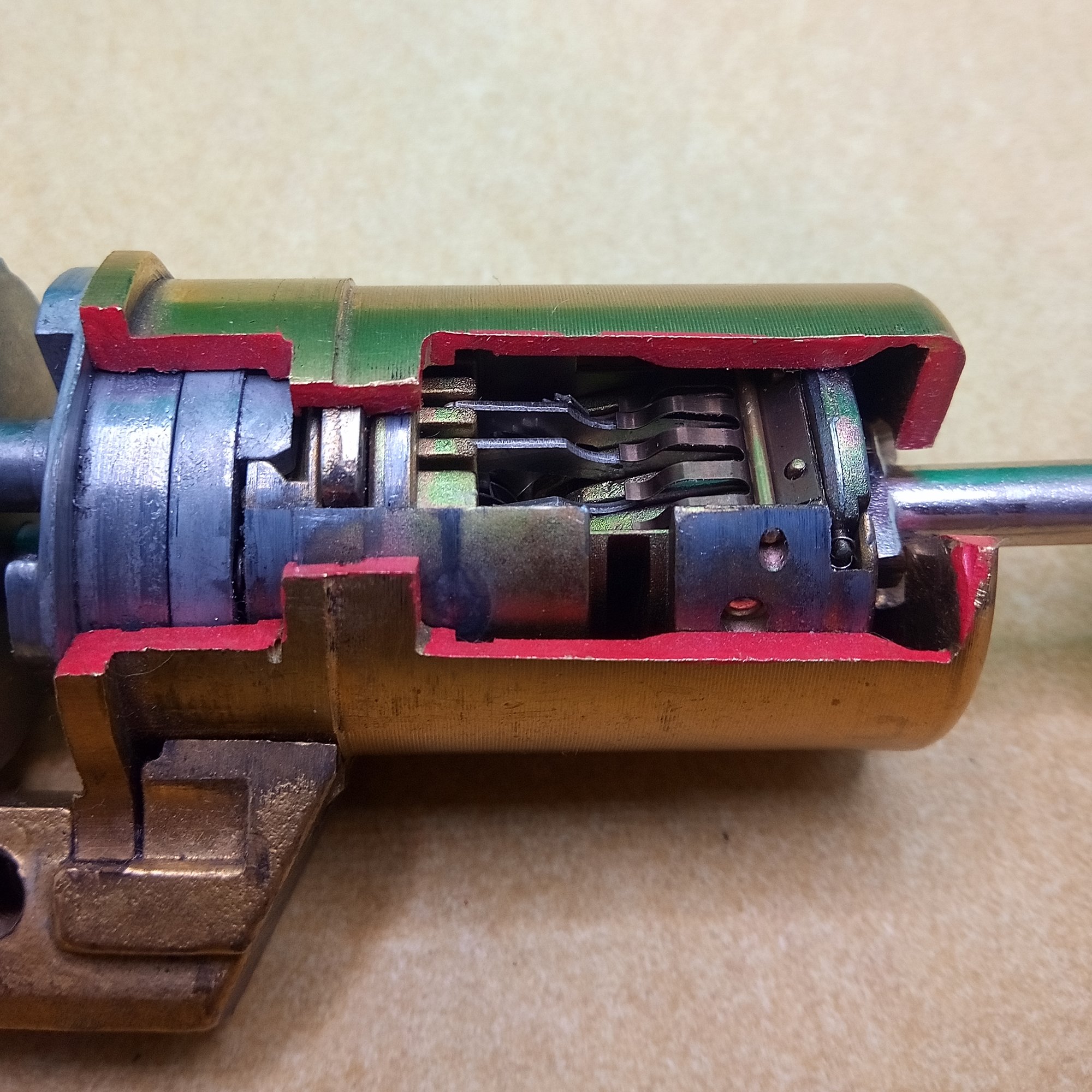
It’s quite obvious where I’m going with this. There can be almost anything inside the shiny cylinder. It will be very difficult to find the solution without taking it a part, or looking at a diagram. The cutaway, like the one from Qikom below, shows the internals from the lock. Reducing the guess work over a picture of the parts.
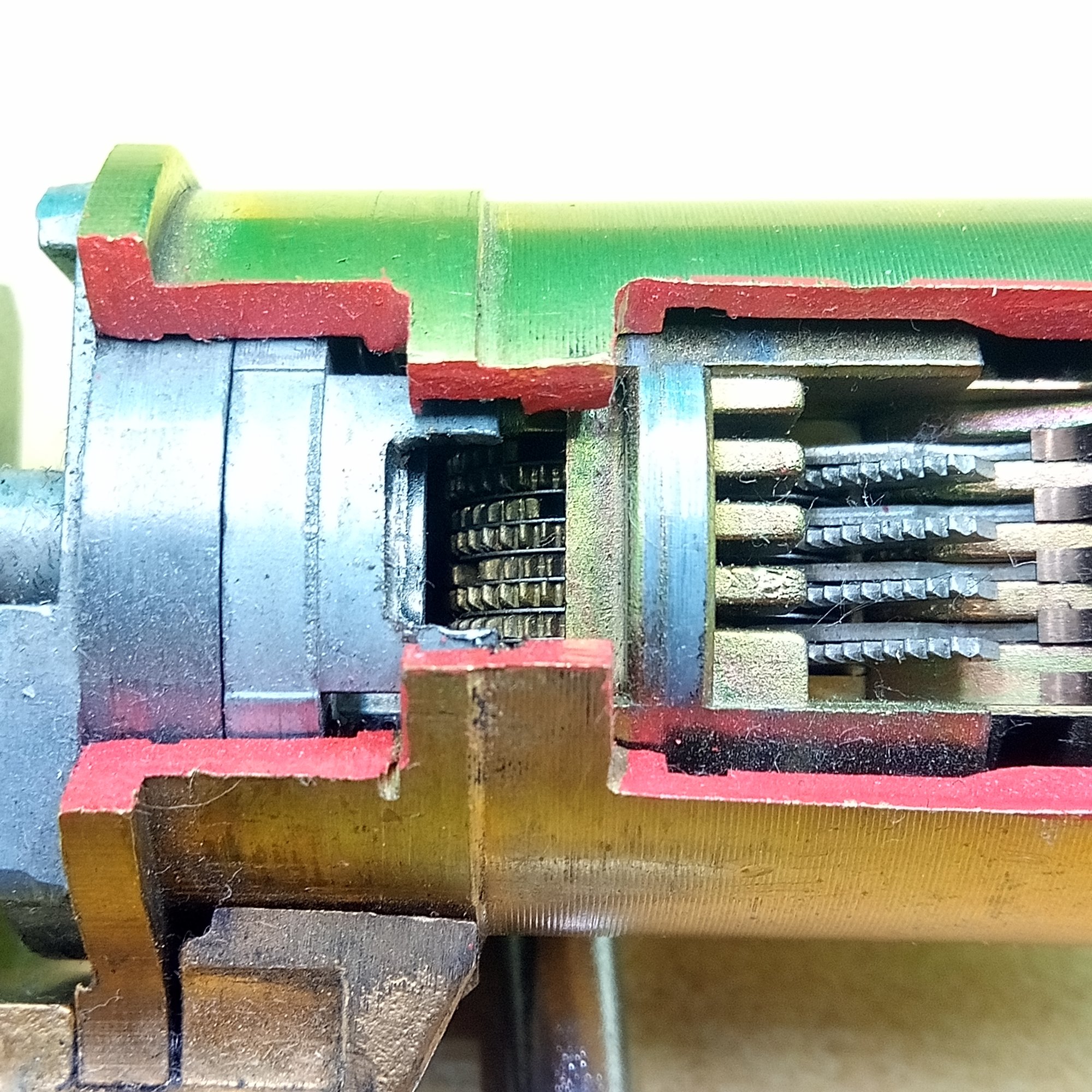
Qikom Fichet 787 Cutaway CC BY-NC-SA 4.0Qikom Fichet 787 Cutaway; The interaction between the lever pack and the gears. CC BY-NC-SA 4.0Qikom Fichet 787 Cutaway; The lock is open. CC BY-NC-SA 4.0
Is it anything like you imagined it to be?
What does the 787 do? The Fichet 787, is a push lever lock. Where the push action allows the lateral movement of the levers to rotate a set of gears to the opening position. The sidebar is a passive element that checks if the gears are all aligned. With the correct key, the cylinder moves inwards, clears a blocking element, and is able to rotate. At the same time, the key is trapped by two half circle disks.
It is quite possible you have seen this lock before, as it has been around for decades. I’ve learned about the lock in 2018, and recently expanded the knowledge at the Association des Crocheteurs de France lock conference in December 2022. I’ve learned the dovetail, which connects the cam to the core, is a fairly recent addition that prevents a (partially) destructive attack, for example.
French locks are my favorite weird lock designs, where Fichet is king. The ingenuity is admirable, with many clever ways to solve the same problem…
In an effort to quantify the locksport world, I’m taking my measuring tools to locksport in an attempt to learn the details. For example, how much torque is required to pick a lock. With this knowledge, we can build better lockpicks, and teach proper technique. In this blog, I’ve set out to compare the hardness of key blanks for impressioning.
As I’m not a machinist, nor do I have access to fancy hardness measuring equipment, I’ve found the cheapest method I could use at home. There are many methods, and many systems, to measure the hardness of metal. One difficulty was to get familiar with the lingo and to find a measurement tool that works for key like metals, thin, soft, etc.
The most common method of cheap hardness testing is to use Rockwell hardness testing files from measuring hardness of knifes. Usually in the range of C40 to C65 in increments of five. I’ve found similar methods online for testing the hardness of lead with pencils. Where HB hardness pencil will be equivalent to a certain percentage lead in tin. To my knowledge, none such system exists for brass.
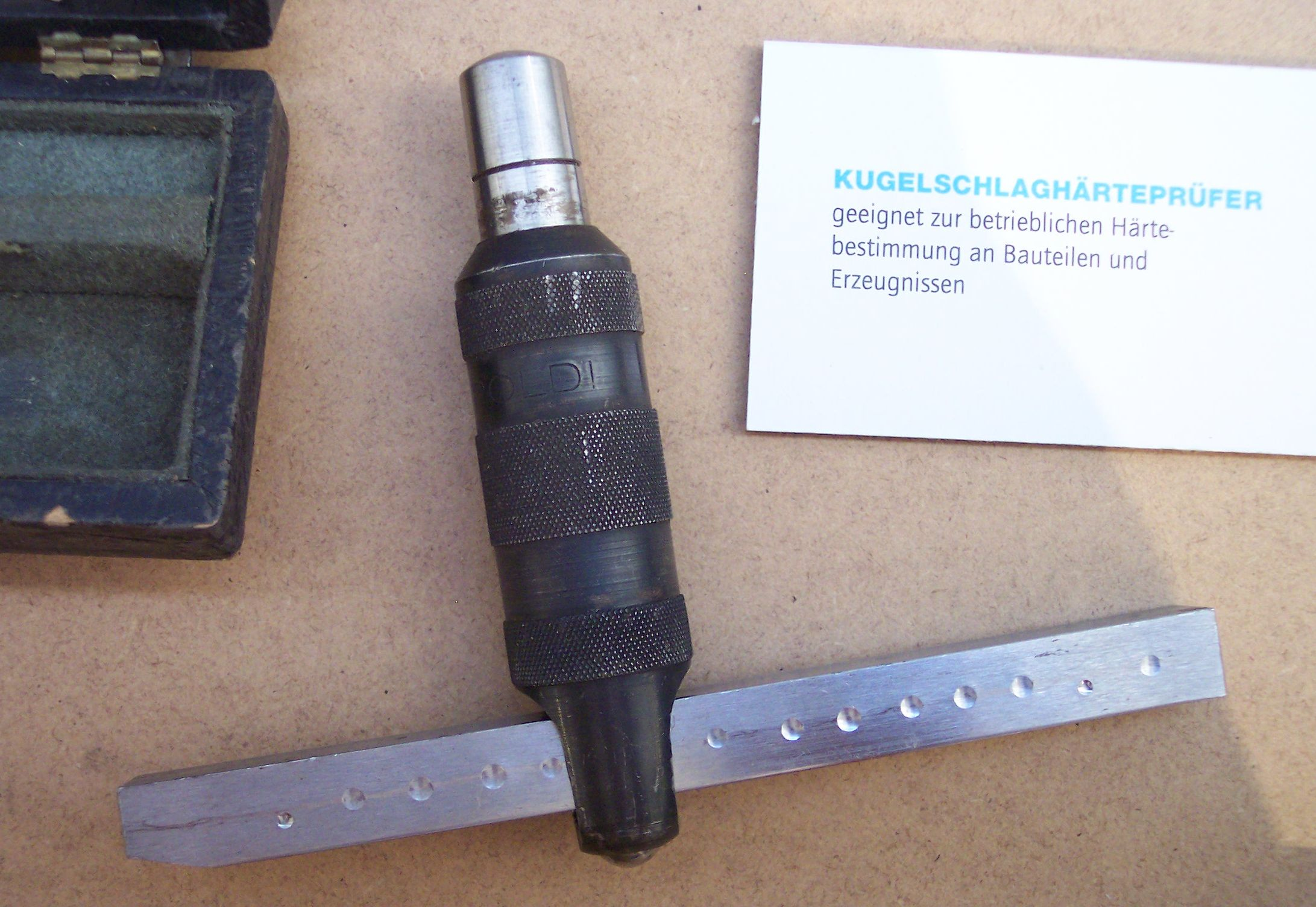
More expensive methods press a hardened piece of metal with a known force into the sample, and measuring the indentation. While most of these measuring jigs are too expensive, I’ve found one for cheap. That is the Poldihammer test, which is sold on eBay for around €100. The tool uses a captive ball bearing which presses both on a bar of known hardness and the sample. You just simply place it on the object and hit it with a hammer. The ball bearing presses with equal force into both metals object. Comparing the dents gives you the Brinell hardness.
My Poldihammer came with a small magnifier and scale. It’s not so easy to use, and the resolution is minimal. The kit also comes with convention tables, but they feel very approximate. My solution is to measure the indentation with a digital microscope and calculate the BHN from this formula from Wikipedia:
BHN = Brinell Hardness Number (kgf/mm2). P = applied load in kilogram-force (kgf) D = diameter of indenter (mm) d = diameter of indentation (mm)
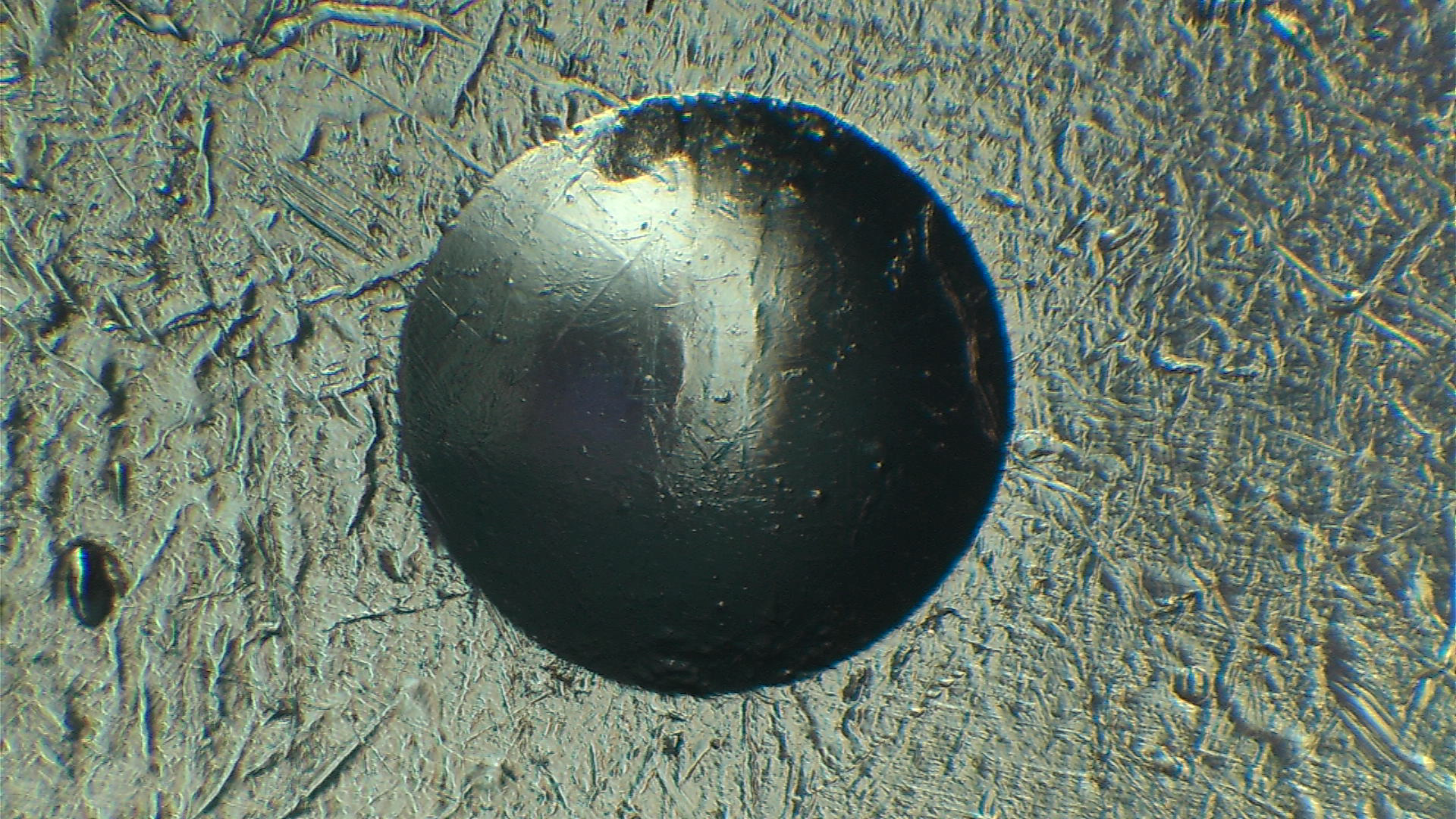
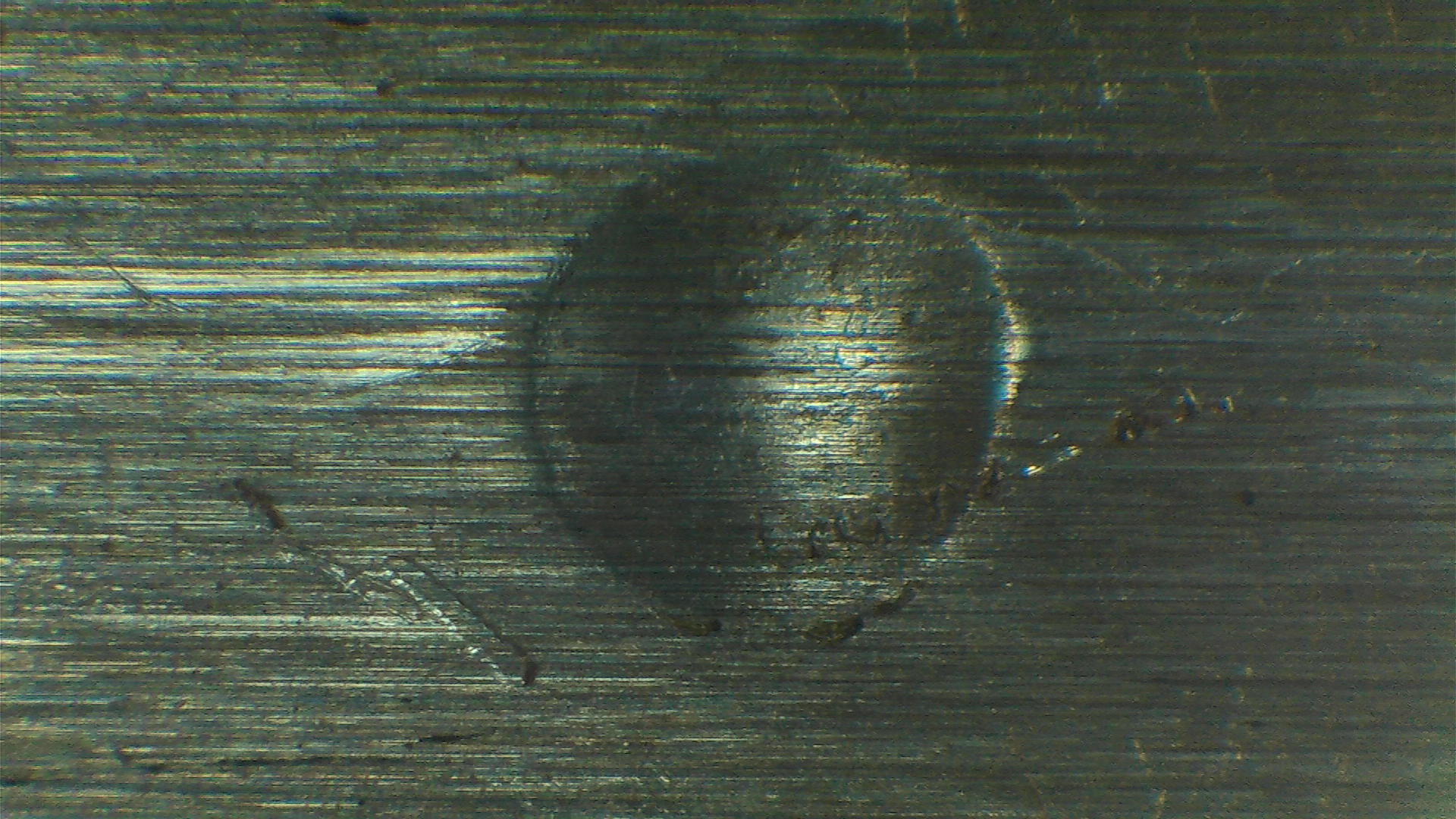
It doesn’t take much to use the dent on the reference bar to calculate the force. As the force is equal on the key, we can use the force to calculate the hardness of the keys. Let’s take a look at a real world example. The next two images are the dents under high magnification.
Key for measurement B1: 214.581 by 209.048 pixels. This is 2.00 mm on average.Reference bar with hardness 187. Measurement B1: 163.809 by 162.959 pixels. 1.55 mm average width.
For completeness, I’ve added the calculations as to make the method repeatable, and accessible to more hobbyists. The force is calculated as follows: P = BHN(reference) * PI * D * (D – SQRT(D^2 – X^2)). Where X is the dent on the reference bar. In LibreOffice Calc, this is =187*PI()*10*(10-SQRT(10^X^2)).
The hardness of the key is calculated BHN(Key) = P /(PI * D *(D^2-Y^2)). Where Y is the dent on the key. In LibreOffice Calc, this is =P/(PI()10(10-SQRT((10^2)-(Y^2))))
For the numbers above, I’ve found the force as 706.25, and the BHN of the key as 110.8. I’ve repeated the test for four more keys and measured them as 114.5, 103.9, 97.0, and 118.2 with an average of 108.9. In similar measurements, I would drop the minimum and maximum and take the average of the remaining samples, which is 109.7.
The following table is the result of my measurements. The results are surprising.
Brand
Average
Aquired date
Comment
Measurement [BHN]
Silca
Three keys
2018
CS206 Brass.
147.1
Silca
Three keys
2022
LD5R Steel.
222.8
JMA
Three keys
2018
Keys from Nigel Tolley.
135.4
Bauelemente
Three keys
2019
SSDeV Impressioning.
123.5
Abus
Three keys
2019
LockCon
133.4
Abus
Three keys
2020
Toool Inventory
135.8
Abus
Five keys
2022
LockCon Box A
127.4
Abus
Five keys
2022
LockCon Box B
108.9
Abus
Five keys
2022
LockCon Box C
131.5
Table of key measurements. Keys for Abus C83 with keyway similar to Y1.
The data revealed something interesting and confirmed a hunch. The hardness of steel keys is the highest, obviously. We see the brass alloy (nickel silver) have a range of values. There are also outliers, for example Box B, these keys are softer than keys acquired on the same day.
I’ve since played with both harnesses and can tell one hardness from another in impressioning. But only after I’ve switched from one hardness to another after a dozen opens, with the same hardness. After switching backwards and forwards, I can’t tell the difference in a blind test.
One final note, the kit comes with one reference bar that is consumable. We have about a hundred measurements in them. I have not found replacement bars, yet. But I believe we can use a similar shaped bar of steel, which is then calibrated with the reference bar before use. This will reduce accuracy, but can be accounted for if the measurements are comparative.
Thanks for taking your time to read about measuring hardness of keys. If you have a professional (Brinell) hardness measurement tool, and want to help out, let’s swap keys and compare notes. I’m always open to learn.
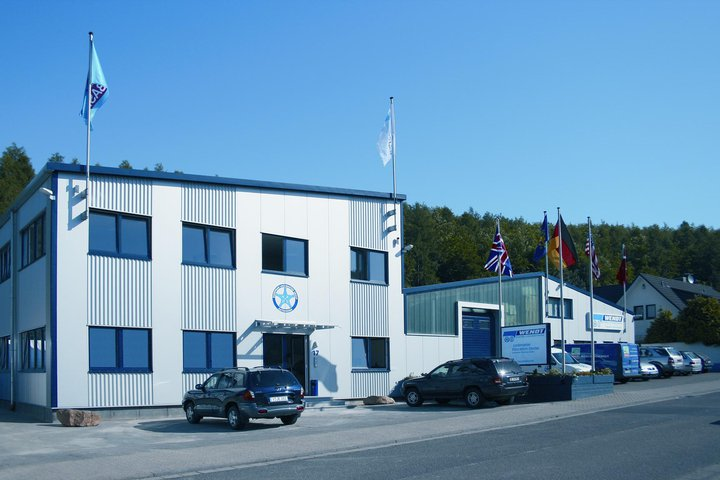
On the 25th and 26th of March, Wendt organized a lockpicking championship in collaboration with SSDeV and ACL. Who is Wendt? They are creators and suppliers of locksmithing and lockpicking tools. They have a yearly house-fair to demonstrate the newest in locksmithing tools, and host competitions. This year’s event was specifically for the lockpicking community.
Wendt HQ in Bergheim, Germany. (Picture copyright Wendt.)
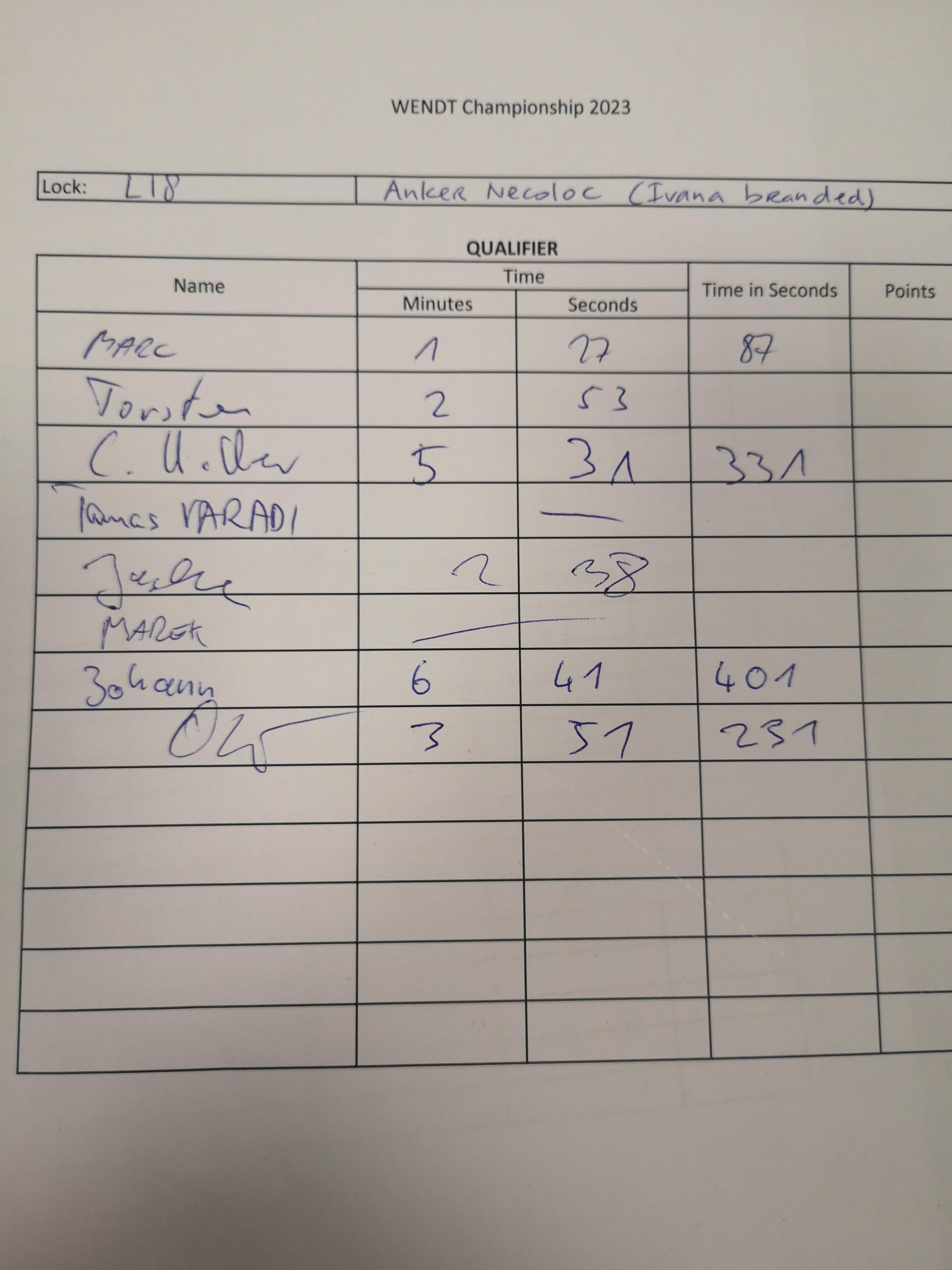
The main attraction is the German-style lockpicking competition. Where, in short, every competitor brings them own double euro pin tumbler cylinder. You’ll have to prove you can pick it yourself in five minutes to qualify. For each of the competitors locks, you get fifteen minutes for your picking attempt. Where the final score is decided by the person with the most opens in the least time.
For this year, a large variety of locks were present. Iseo, M&C, IX Saturn, IX-6, both Abus XP1 and Cisa SP, and Assa twin 2. Some of these, as you can imagine, are not opened often in fifteen minutes. This was felt as a setback by some, while others are encouraged to practice with even harder locks. Not to mention the endurance required to pick locks for over 5h straight.
Walter and Henri competed were in the competition from Toool. For Henri, it was his second lockpicking event. His video (YouTube) is worth it to watch if you are looking for encouragement to join a similar event. For photo’s of the lockpicking, please see the Facebook page of Wendt.
I’d like to share a few notes on a constructive discussion on how to run competitions. To some, the competitions at events like LockCon were too easy. People felt it was a competition in who can rake the locks, the fastest. Whereas, this event had rounds with very difficult locks, and few opens. There is a balance to be found is between the two systems. The comments are clear: give us harder locks to pick, but do give locks that are pickable in a reasonable time.
There was plenty of room to meet other lockpickers at the event, chat with the vendors, and join the side competitions. Han Fey had a very interesting challenge, where you are given a key ring and a box of locks. Where the goal was to match the most keys to the most locks in the least time. The catch is, you only got one chance. If the key didn’t fit, your attempt was over.
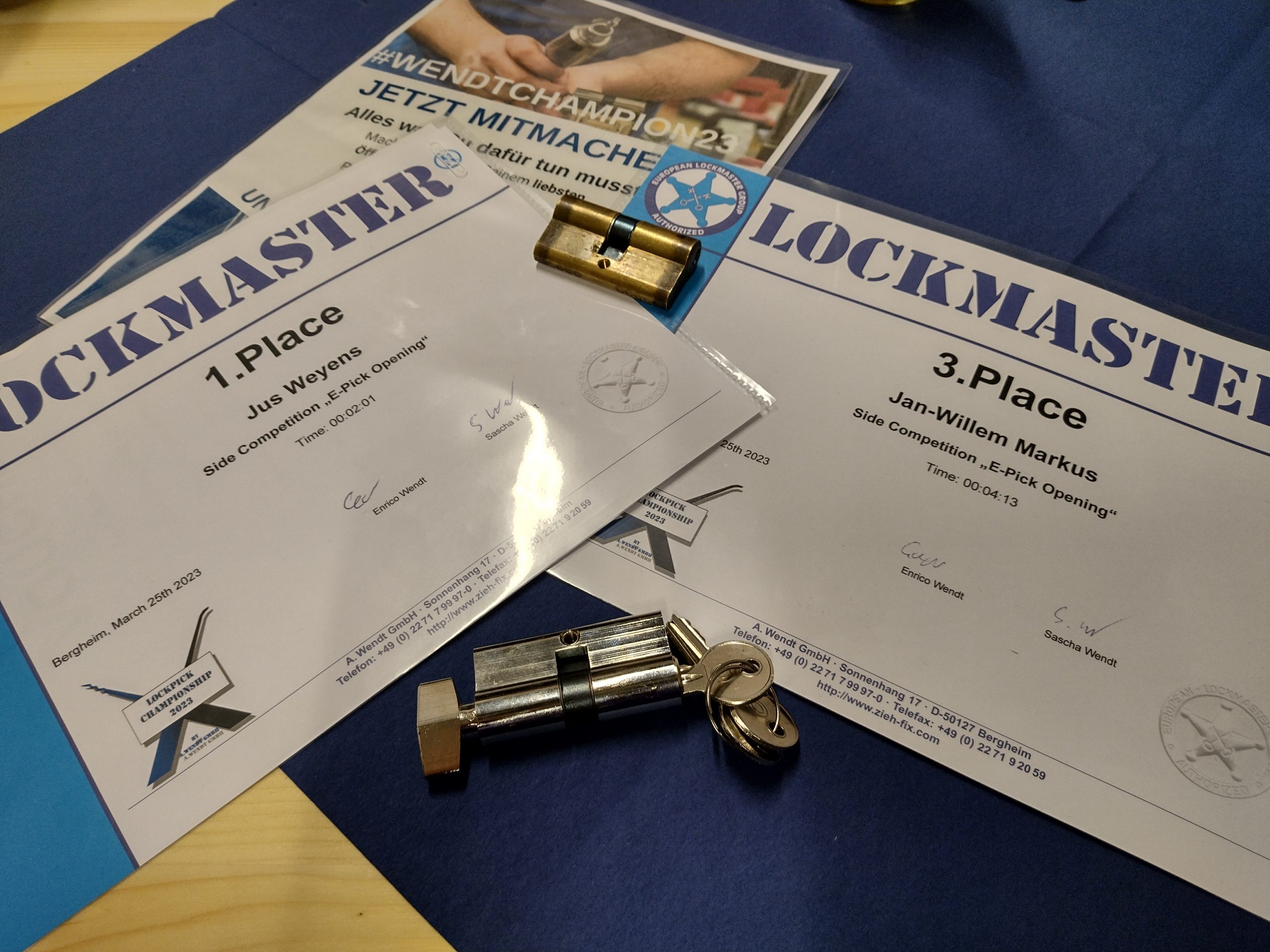
Just for fun, Jos and I competed in the electropicking competition and got 1st and 3rd place. The real star of the show are, of course, the electropicks Wendt sells. Truly amazing equipment.
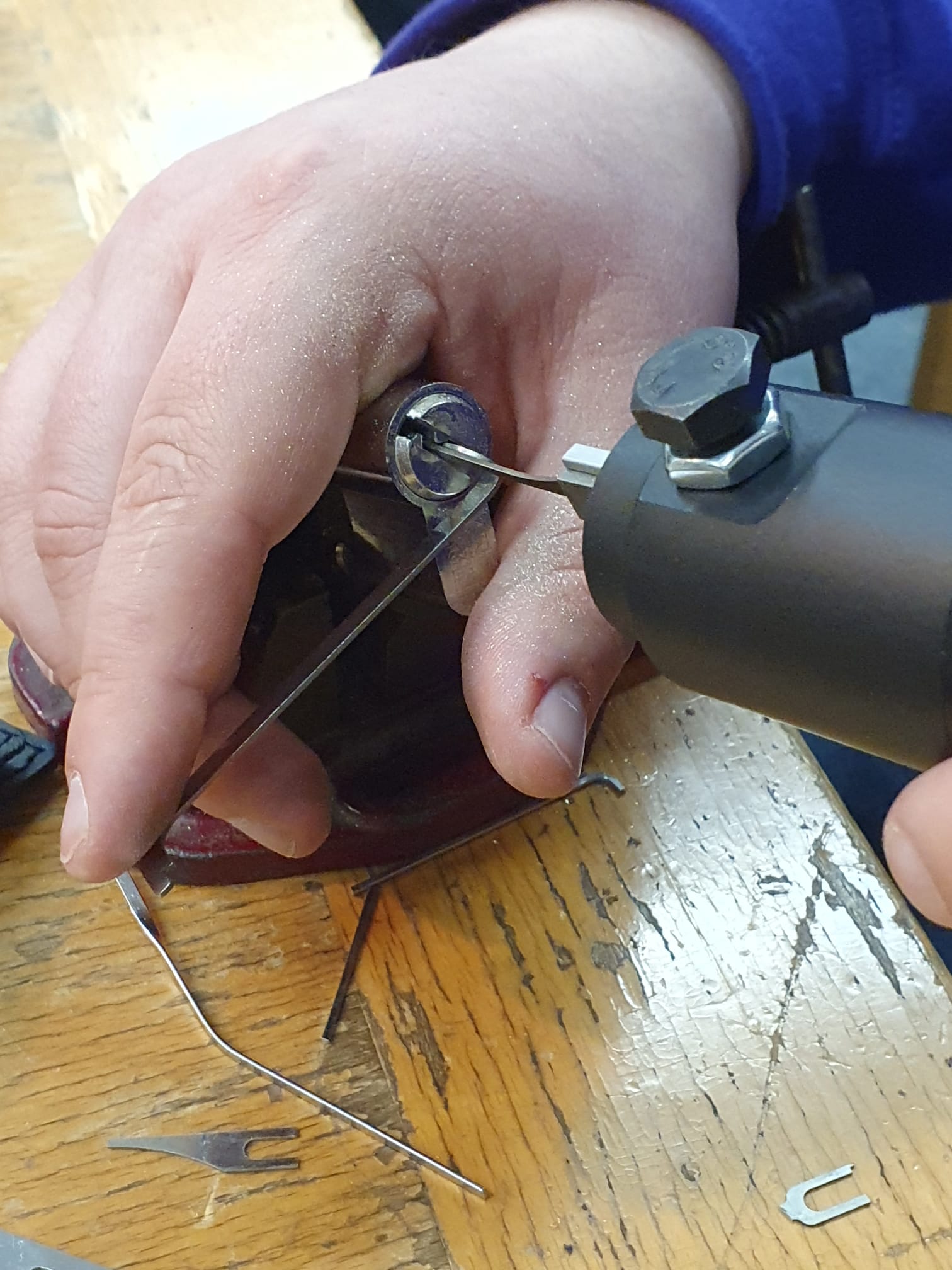
On a side note, we call electropicking non-destructive as the locks remains functional. However, the repeated impact of the pick needle and the pins do create a lot of brass dust, as seen in the picture below.
To wrap up this post, it was great seeing so many old friends and to make new ones. Time well spent. Thanks, Sasha, and the Wendt team, for organizing this event!